An AI tour guide app is only useful if what it tells visitors is true, and the way you get there is by grounding every answer in a verified source document rather than letting a language model guess from its training data. Grounding means the system retrieves an approved fact (a museum’s opening hours, a temple’s dress code, a festival’s date) from a live knowledge base before generating a response, and cites where that fact came from. Without this step, a destination assistant is just a chatbot with a nice map icon, and it will eventually tell a tourist the wrong closing time or invent a historical detail that sounds plausible but isn’t.
Fooyo builds this kind of infrastructure directly. Its Smart Tourism platform combines live crowd data with AI-powered guides for destinations, and its AI Knowledge Base product is a retrieval-augmented generation (RAG) system built specifically to return grounded, source-cited answers rather than free-form generation. Both run in a client’s private cloud, which matters when the “knowledge base” includes sensitive location data, ticketing systems, or government tourism board content that can’t sit inside a shared public model.
TL;DR
- Hallucination isn’t a fixed AI flaw. It’s task-dependent: grounded summarization can be as low as 0.7-3.3% error, while open-domain or unstructured queries can hit 22-88%.
- RAG architecture, not a bigger language model, is what fixes this. Retrieval accuracy on structured content can reach up to 92%, with only 3-14ms of added latency per query.
- Multilingual coverage is now table stakes. Competing tools already span multiple languages, so a destination assistant limited to one or two languages is behind the market, not ahead of it.
- The AI travel market is growing fast (12.7 billion to 26.5 billion USD in 2026, 26.7-38% CAGR through 2030), which means more assistants competing for the same traveler attention, and more pressure to be the accurate one.
- Private deployment and human review gates matter as much as the model itself, especially under PDPC and ASEAN AI governance guidance.
About the Author: This article is written from Fooyo’s operating experience building RAG-based knowledge systems and its Smart Tourism platform for destinations and hospitality clients across Singapore, Indonesia, and Japan, where grounded, source-cited answers are a deployment requirement, not a feature request.
Why Do AI Tour Guides Hallucinate in the First Place?
A language model hallucinates because it’s designed to predict the next plausible word, not to check a fact against a source. When a tourist asks “is the rooftop bar open on Mondays,” a general-purpose model without grounding will produce a statistically likely-sounding answer based on patterns in its training data, not the venue’s actual hours. This is why hallucination rates swing so widely by task: on constrained, well-structured summarization tests, top models sit at 0.7 to 3.3 percent, but on open-domain or loosely defined queries, the failure rate can range from 22 percent to over 88 percent. Travel questions, especially about hours, prices, local customs, and safety, sit closer to the open-domain end of that spectrum because the correct answer changes by season, by location, and by the day the tourist happens to be asking.
The practical consequence is that an app built on a general model without retrieval is gambling on every answer that isn’t a well-known fact. A tourist who gets told the wrong museum closing time doesn’t blame the model architecture. They blame the app, and by extension, the destination or operator who deployed it.
What Does “Grounding” Actually Mean in a RAG System?
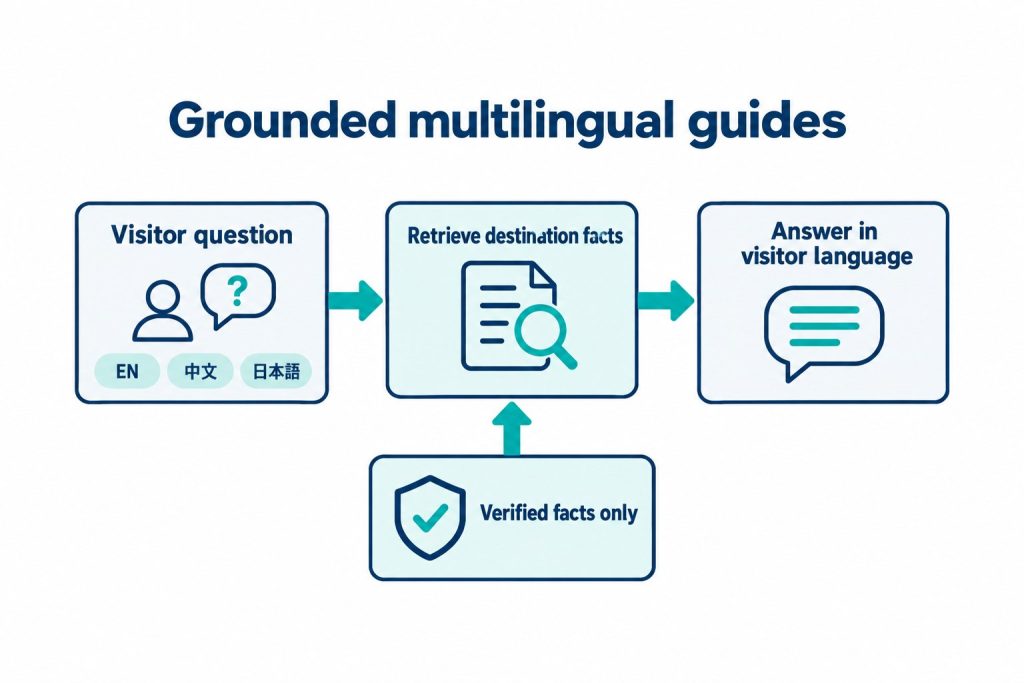
Grounding is the process of retrieving a specific, verified passage from an approved knowledge source and forcing the model to base its answer on that passage rather than on memory. Think of it like the difference between a guide who answers from memory built up over years and one who pulls out the venue’s official information sheet before answering. The second guide might sound slightly less spontaneous, but they’re right more often, and they can point to exactly where the answer came from.
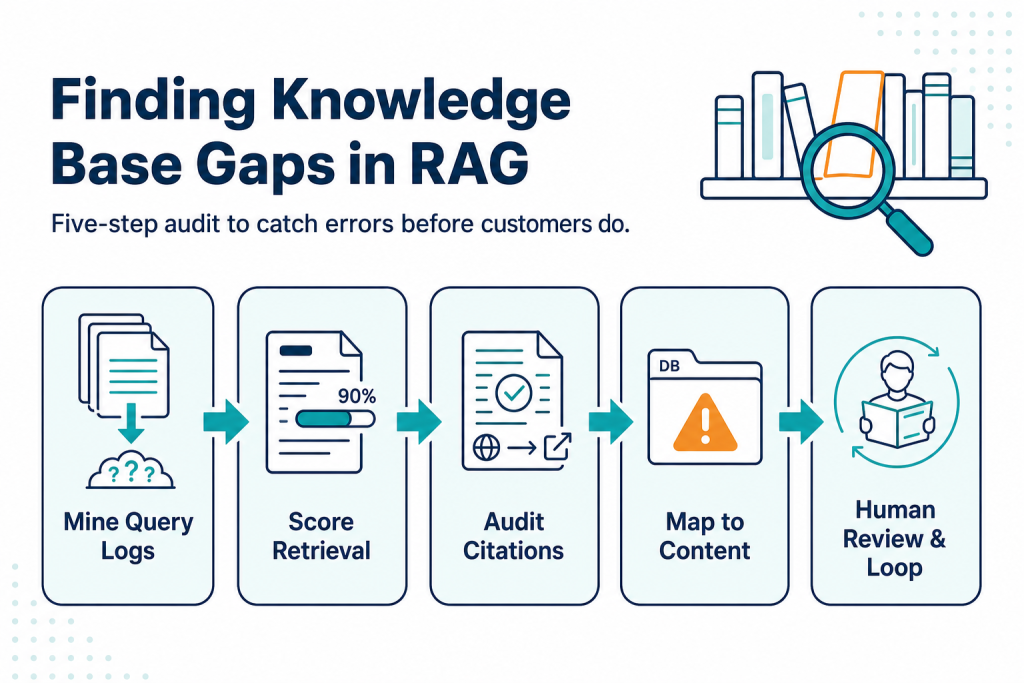
Technically, this works through a two-step pipeline: a retrieval step that searches the knowledge base for the most relevant document chunks, and a generation step that composes a natural-language answer using only those chunks as context. Major RAG frameworks such as LlamaIndex and LangChain now demonstrate near-100 percent accuracy on controlled test sets, with retrieval accuracy reaching up to 92 percent on structured document corpora, and the orchestration itself typically adds only 3 to 14 milliseconds of processing time per query. That’s a negligible latency cost for a substantial jump in factual reliability.
Fooyo’s AI Knowledge Base applies this same retrieval-then-generate pattern, with every answer citing its source document so a human reviewer, or the end user, can check where the information came from. That source citation isn’t cosmetic. It’s what turns a plausible-sounding answer into a verifiable one.
How Do You Keep a Multilingual Tour Guide Accurate Across Languages?
Multilingual accuracy depends on grounding the retrieval step in the source language first, then translating the retrieved fact, rather than translating the question and hoping the model retrieves correctly in a second language. Building on the retrieval mechanism described above, the harder problem in a multilingual assistant is that meaning can shift subtly across languages, especially with idioms, local terms, or culturally specific details like dress codes at a religious site. If a knowledge base only stores facts in English and relies on the model to translate on the fly during generation, small errors in translation get generated fresh each time, with no source to check them against.
The more reliable pattern is to store or index source documents so retrieval works well regardless of the language the tourist asks in, then generate the final response in their preferred language from that grounded retrieval. This is closer to how the strongest tools in the market already operate. Documented multilingual coverage among competing AI travel assistants is now substantial, with many spanning 8 to 21 languages. A destination assistant aimed at international visitors, particularly across Southeast Asia where Fooyo operates, needs to plan for this level of coverage from the outset, not add languages as an afterthought once English is working.
What Should a Destination Actually Look for in an AI Tour Guide App?
A destination evaluating an AI tour guide app should look past the demo and ask specifically how the system handles unknown or ambiguous questions, because that’s where hallucination risk concentrates. A well-built system will say “I don’t have that information” rather than generate a confident guess, and it will show its source. The table below breaks down what to check during evaluation.
| What to Check | Why It Matters |
|---|---|
| Source citation on every answer | Lets staff and visitors verify facts instead of trusting the app blindly |
| Behavior on unknown questions | A system that admits uncertainty is safer than one that always answers confidently |
| Update process for the knowledge base | Hours, prices, and events change; stale grounding sources still hallucinate |
| Language coverage and quality | Competing tools already cover 8-21 languages; fewer than that limits reach |
| Deployment model (public vs. private cloud) | Determines whether visitor data trains a shared model or stays contained |
| Integration with existing booking/CRM systems | Avoids a rip-and-replace project and keeps operational data in sync |
Stepping back from technical checks, there’s also an FAQ-readiness question destinations should ask themselves. Structuring destination content as clear, specific question-and-answer pairs, covering things visitors actually type such as “what should I wear,” “how long does the tour take,” or “is it wheelchair accessible,” directly improves what a grounded system can retrieve and cite. This same structure also improves how AI search assistants surface a destination’s information externally, which is a growing channel for pre-trip research [university.forwardfuture.ai][monkeytravel.app].
How Does Live Data, Like Crowd Levels, Fit Into a Grounded Assistant?
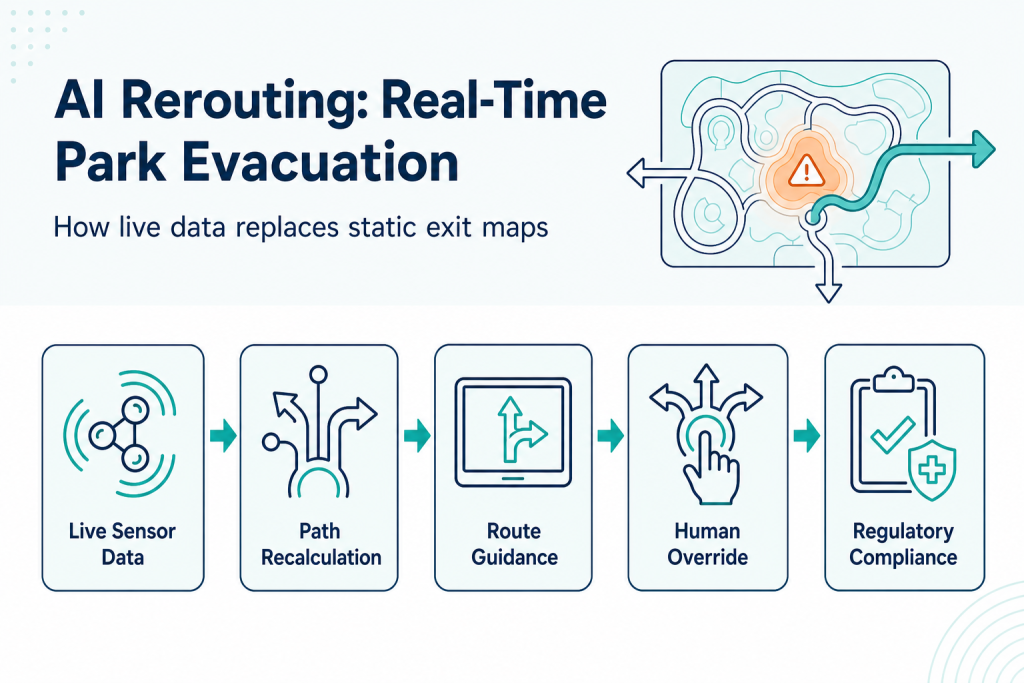
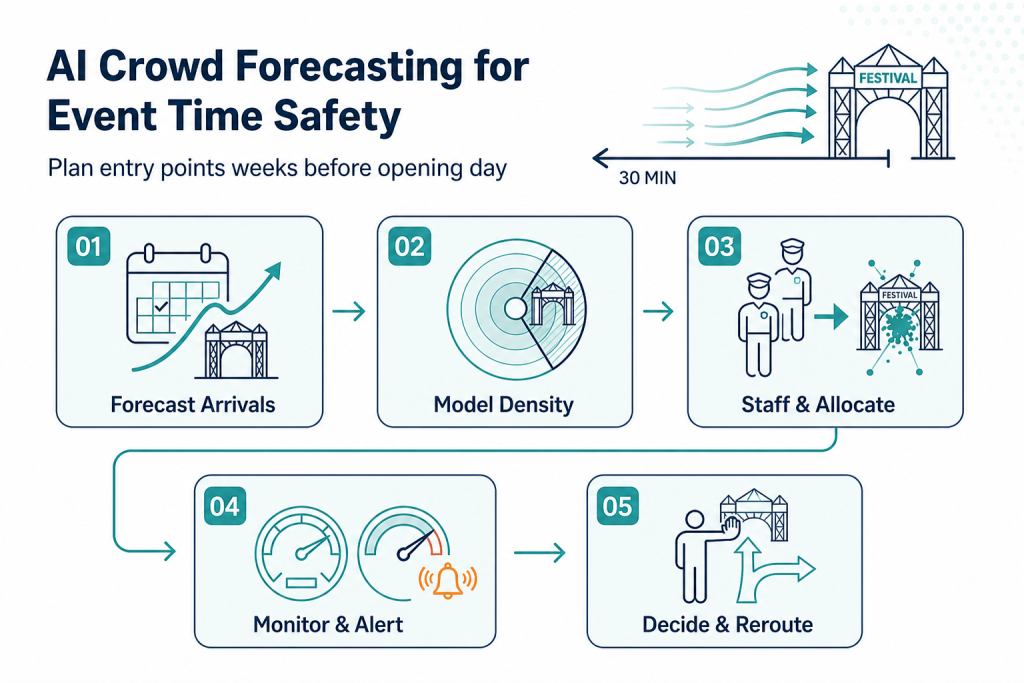
Live data extends grounding beyond static facts into real-time conditions, which is where a lot of tourist frustration actually happens. A knowledge base can correctly cite that a market “typically opens at 10am,” but that’s a different problem from telling a visitor the market is currently at capacity and a 45-minute wait is likely. Grounding a real-time answer means the retrieval step pulls from a live feed, such as crowd density sensors or ticketing system availability, rather than a static document.
This is the layer Fooyo’s Smart Tourism platform is built around: combining live crowd data with the AI-guide and booking layer so an assistant can answer both “what is this place” and “should I go now” from the same grounded system. Feeding live operational data into an AI agent this way also opens up automation beyond Q&A, like adjusting recommended visit times or triggering booking prompts when capacity frees up, which is the kind of workflow automation that separates a static FAQ bot from a genuinely useful travel agent [masterofcode.com].
What About Compliance When an AI Guide Handles Visitor Data?
A related but distinct question from accuracy is what happens to the data an AI tour guide collects while answering questions, and this is where private deployment becomes a compliance issue rather than just a technical preference. In Singapore and across ASEAN, AI systems handling personal data must comply with guidelines including the PDPC’s July 2026 Advisory Guidelines on Generative AI, which require fresh consent for training data unless that data is already publicly available without digital barriers. Organizations also need to account for cross-border data transfer restrictions and align with the ASEAN Guide on AI Governance and Ethics on transparency and risk mitigation.
This is a direct reason government agencies and larger operators tend to require private-cloud deployment rather than a shared public AI model: visitor questions, booking details, and location history shouldn’t end up training someone else’s model. Fooyo deploys every product, including Smart Tourism and the AI Knowledge Base, into the client’s own private cloud environment for this reason, with human-in-the-loop review gates on automated actions rather than fully unattended automation.
Frequently Asked Questions
What is an AI tour guide app?
It’s a mobile or web assistant that answers visitor questions about a destination, often combining a chat interface with maps, bookings, and sometimes audio narration, ideally grounded in a maintained knowledge base rather than a general model’s memory.
How accurate are AI travel assistants today?
Accuracy depends heavily on the task. Grounded, retrieval-based systems can achieve near-100 percent accuracy on controlled tests with up to 92 percent retrieval accuracy on structured content, while ungrounded, open-domain answers can be wrong 22 to 88 percent of the time.
Can an AI tour guide work without internet access?
Some consumer apps are built for offline, self-paced use once content is downloaded. Destination-specific assistants that need live crowd or booking data generally require a connection to stay current.
How many languages should a destination assistant support?
Enough to match the visitor mix a destination actually serves. Comparable tools in market already cover 8 to 21 languages, so international destinations should plan multilingual grounding from the start rather than adding languages later.
What’s the difference between a general AI chatbot and a grounded tour guide system?
A general chatbot generates answers from patterns in training data. A grounded system retrieves a specific, current fact from an approved source first, then generates the answer around it, and cites the source.
Why does private cloud deployment matter for tourism AI?
Beyond data security, it addresses regulatory requirements like the PDPC’s consent rules for training data and cross-border transfer restrictions under ASEAN AI governance guidance, and it keeps visitor data from training a shared public model.
Is the AI travel assistant market actually growing, or is this a passing trend?
It’s growing quickly. The global AI in travel and tourism market is valued between 12.7 billion and 26.5 billion USD in 2026, with projected annual growth of 26.7 to 38 percent through 2030, driven by both consumer trip-planning tools and destination-side platforms.
About Fooyo
Fooyo is a Singapore-headquartered company that builds data platforms and AI agents for enterprises, with production deployments running in weeks rather than the typical six-month enterprise build cycle. Its AI Knowledge Base delivers grounded, source-cited answers from a RAG architecture deployed in a client’s private cloud, and its Smart Tourism platform pairs that same grounding approach with live crowd data, bookings, and visitor engagement tools built for destinations. The company is based in Singapore with a development office in Chengdu and a business partnerships presence in Tokyo. Fooyo is trusted by government agencies, enterprises, and SMEs across Asia, and works as a hands-on partner that builds and operates the product with a client rather than handing over a report and moving on.
If you’re evaluating an AI tour guide app or a broader destination platform and want answers grounded in your own verified content instead of a model’s best guess, get in touch with Fooyo to scope a pilot.
References
- Audiala: the AI tour guide App – App Store (apps.apple.com)
- How to Plan Amazing Trips with AI Travel Assistants: Complete 2025 Guide (university.forwardfuture.ai)
- I Tested 7 AI Trip Planners in 2026 – Here’s the One Worth Using | MonkeyTravel (monkeytravel.app)
- Generative AI in Travel Boosts ROI by 20% – Here’s How (masterofcode.com)