How we deliverFDE as a Service

A forward deployed engineer who ships your AI, and stays to run it

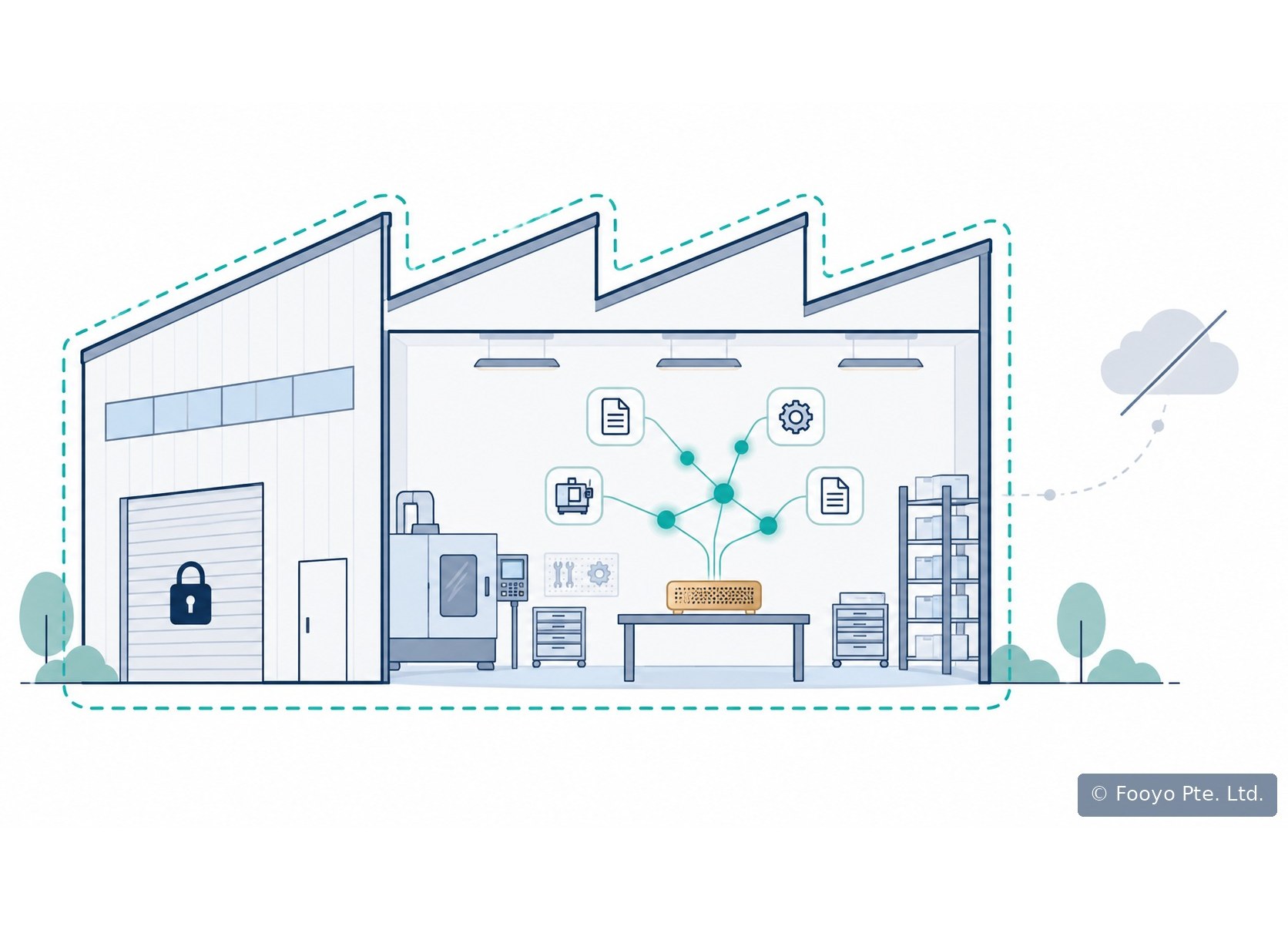
Not a report, not a prototype hand-off. One real workflow, scoped with the people who do it, in production in about six weeks — in your own cloud, private or public, or on-premise. You own what we build.

Built for medium enterprises without an AI team

Manufacturing

Logistics & freight

Trading & distribution

Enterprises with stalled pilots

The challenge

Why do AI pilots stall
before they reach production?

MIT's NANDA study put roughly 95% of generative-AI pilots short of production — drawn from 52 interviews, 153 survey responses and more than 300 initiatives, and marked preliminary by its authors. The pattern behind the number is familiar enough: a prototype built beside the real systems rather than inside them, and nobody accountable for running the result.

The demo never became a system

It answered well in the meeting room. Then it met your permissions, your ERP, your exceptions — and the project quietly stopped being discussed.

The backlog is not a hiring problem

Quotations, order emails and SOP questions pile up faster than headcount fixes. AI engineers are scarce, expensive, and rarely want to learn your product catalogue.

The consultancy left after the slide deck

A strategy, an architecture diagram, a prototype — and nobody to carry it into production, operate it, or answer for it when it is wrong.

The difference

What changes when an engineer stays.

Pilot purgatory looks like FDE as a Service looks like
A demo that impresses, then goes quiet. A scoped pilot that moves to production on an agreed timeline.
A consultancy report full of recommendations. A working system the engineer builds and then operates with you.
A backlog that hiring cannot clear fast enough. A workflow live in your stack, handling real quotations or orders.
Nobody owning the system once delivery ends. You own it, and we stay to run and support it.

Plain definition

What is a forward deployed engineer?

A forward deployed engineer works inside your business rather than from a vendor's backlog: sitting with the people who do the work, building against their real cases, and staying with the system once it is live. The role came out of the frontier AI labs and enterprise software firms, where it turned out that the gap between a capable model and a working production system needs an engineer on site, not a specification thrown over a wall.

FDE as a service is that role bought as an outcome instead of as headcount — scoped, staged and priced so a medium enterprise can carry it.

Sits with your team

In your operations, on your real cases, with the people whose work the system is supposed to carry — not in a discovery workshop.

Ships production, not prototypes

Real permissions, real integrations, real exceptions, human review gates on anything sensitive, audit logs from day one.

Stays to run it

We operate the system with you after go-live, close the gaps the first month exposes, and hand over whenever your team is ready.

How an engagement runs

One workflow, fixed scope, production in about six weeks.

Six weeks is what a scoped first workflow usually takes; your integration complexity, how ready the data is and how fast approvals move set the real date, and we agree it before starting. We begin where the work is stuck rather than with a platform rollout, so you see the thing working — on your own data, in your own environment — before you commit to anything wider.

1

Scope

A 30-minute demo, then a working session with the people who run the workflow today. We leave with a fixed scope, a success measure, and the systems list.

What you get
  • Fixed scope and price

  • One measurable workflow

  • Deployment target agreed

2

Ship

Staged pilots against your real cases, in your environment, with review gates and audit logs in place before anything touches a customer.

What you get
  • Production in about six weeks

  • Your cloud or on-premise

  • Frontier or open models

3

Run

We operate it with your team, watch what the first weeks expose, and widen only once the first workflow is genuinely carrying its load.

What you get
  • Ownership of the system

  • Ongoing operation with you

  • Hand-over when you want it

What it looks like in practice

The quotation inbox that now runs itself.

A trading business was losing days in an inbox: enquiries arrived as email, someone read them, looked up the catalogue, priced the job and typed a quotation back. We scoped that one workflow, shipped an agent that drafts the quotation from the enquiry and the price list, and put a consultant's sign-off in front of every send. The inbox now runs itself, and the consultants only sign off.

Read the case study

Manufacturing know-how, kept

Decades of engineering knowledge captured from the people who hold it, answerable by every engineer, and never leaving the plant.

Read the case study

Operations on one dashboard

Aquaculture cages reporting into a single view, from the farm to head office, with the alerts that matter reaching the right person.

Read the case study

Products behind the engagements

Most engagements stand on a Fooyo product — the AI Knowledge Base, Commerce, Kakis or Smart Tourism — so you are not paying to build the foundations again.

See the products

What comes with it

Production habits, from the first pilot.

The parts that decide whether an AI project survives contact with your operations — and the ones a prototype usually leaves out.

Human Review Gates

You decide which categories of action need sign-off, and who signs off.

Full Audit Trail

Every answer and action is logged, so gaps and errors can be traced and closed.

Role-Based Permissions

The system only ever acts within the access your team has already granted.

Enterprise Integrations

Connects to the ERP, CRM, POS and CMS you already run — no rip-and-replace.

Your Cloud or On-Premise

Private cloud, public cloud or entirely on your own infrastructure — whichever your data rules require.

Frontier or Open Models

Claude, GPT and Gemini on the cloud, or Llama, Qwen and DeepSeek on your own hardware.

6 wk

Typical time from kickoff to a production pilot.

1 workflow

Where we start — the one that is actually hurting.

Yours

The system, the data and the environment it runs in.

Since 2014

Building and running applied AI products for the region.

Bring one workflow that is stuck.

Thirty minutes, your real case, and an honest answer on whether AI is the right tool for it.

Let's have a chat

Fooyo on Medium

Fooyo insights

Read more on Medium

Developing a Prudent AI Knowledge Base with NVIDIA DGX Spark in Singapore

How an international advanced manufacturing company is capturing decades of engineering know-how in an AI system that never leaves its premises, by the Fooyo Enterprise AI team.

Learn more
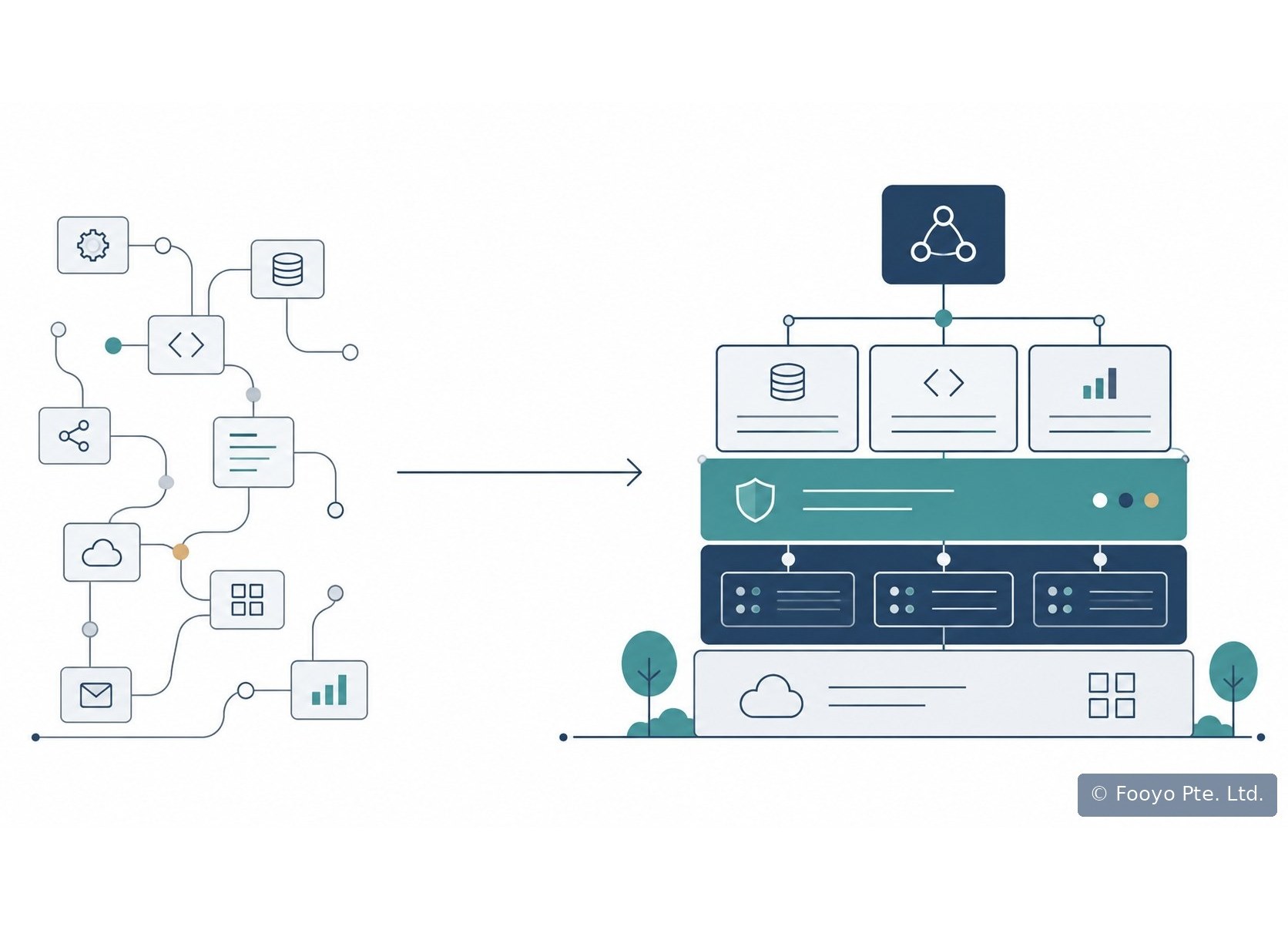
Why We Prototyped With n8n and Dify, Then Rewrote It in Code

Lessons from building an email operations automation and quotation agent, by the Fooyo Enterprise AI team. Low-code workflow tools such as n8n and Dify make it remarkably fast to get an AI-powered process running. For a recent Fooyo Enterprise AI project automating a company’s email-driven quotation process, that speed was exactly what we needed at the start. A few months later, we had rewritten the whole thing in code.

Learn more

WeChat Mini Program Q&As

The questions we get asked most about WeChat Mini Programs — what they are, why brands from Starbucks to Changi Airport use them, and how they fit into a Southeast Asia commerce strategy — answered in one place.

Learn more

FAQs

A forward deployed engineer, or FDE, is an engineer who works inside your business rather than from a vendor's backlog — sitting with the people who do the work, building the system against their real cases, and staying with it once it is live. The role came out of frontier AI labs and enterprise software firms, where the gap between a capable model and a working production system turned out to need an engineer on site rather than a specification thrown over a wall.

FDE as a service is forward deployed engineering bought as an outcome rather than as headcount. Fooyo scopes one real workflow with you, ships it to production in about six weeks, and keeps running it with your team — at a price a medium enterprise can carry, instead of the long retainers that put traditional forward deployed engineering out of reach.

MIT's NANDA study put roughly 95% of generative-AI pilots short of production, from 52 interviews, 153 survey responses and more than 300 initiatives, with the authors marking the figure preliminary. The causes are consistent: prototypes built beside the real systems instead of inside them, permissions and exceptions discovered late, and a hand-off that leaves nobody accountable for operating the result.

Consultancies hand you a report and a prototype. Fooyo builds and runs the product with you — production-grade, in your own cloud or on-premise, with human review gates on sensitive actions — so it actually ships and keeps working after the engagement.

Yes. The system runs in your environment and the deployment is yours — your data, your integrations, your audit trail. We operate it with you for as long as that is useful, and your team can take it over.

About six weeks is typical for a first workflow, starting with the one that matters rather than a platform-wide rollout. We will not promise a date before seeing your systems, though: integration complexity, how ready your data is and how quickly approvals move all set the schedule, so the scope and the date are fixed together before work starts.

Manufacturing, logistics and freight, trading and wholesale — any medium enterprise whose work runs on SOPs, catalogues and quotation emails. We also work with enterprises whose earlier AI pilots stalled before production.

Your cloud — private or public — or entirely on-premise, and the distinction matters more than it sounds. In a cloud deployment the system runs in your own tenancy, but answering a question still sends the prompt and the retrieved passages to the model provider, under enterprise terms that forbid training on your data. Where nothing may leave your network at all, we run open models such as Llama, Qwen or DeepSeek on your own hardware, and no call goes out. We walk through which of the two your data rules require during scoping, and the security page sets out the rest.

One workflow that hurts, the people who do it today, and access to the systems it touches. You do not need an AI team, a data warehouse, or a cleaned-up document library — we start with what you actually have.

Get Started

Ready to get one workflow into production?

Let's have a chat. Tell us where the work is getting stuck, and we'll show you what we'd build — no pitch deck.